INDUSTRY:
HEALTHCARE
YEAR:
SPRING 2022
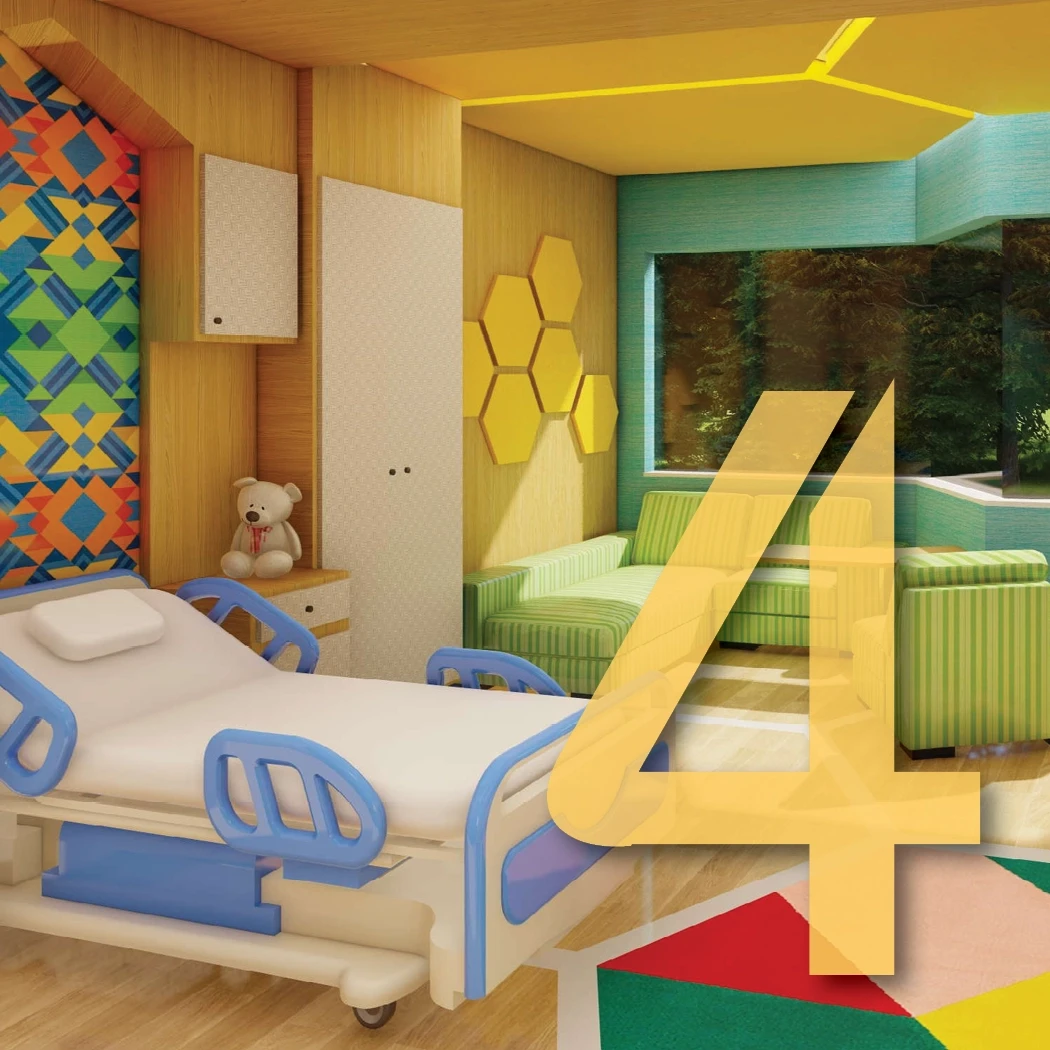
Pediatrics Room
the brief - honeycomb.
The hexagonal cells of the honeycomb are one of nature’s most resilient architectural forms. With honey also known for its healing properties, drawing inspiration from the honeycomb for a hospital design allows for a cohesive layout that fosters both strength and wellbeing.
floor plan patterns.
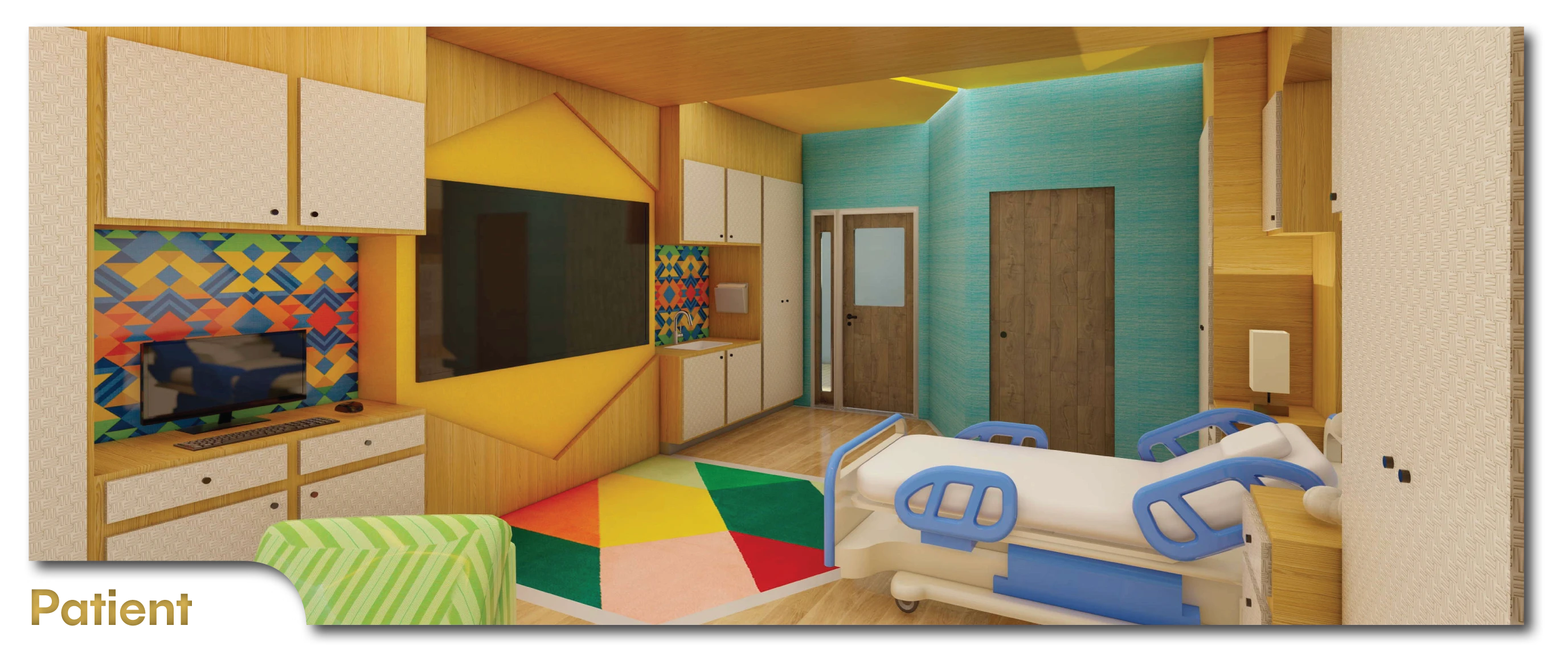
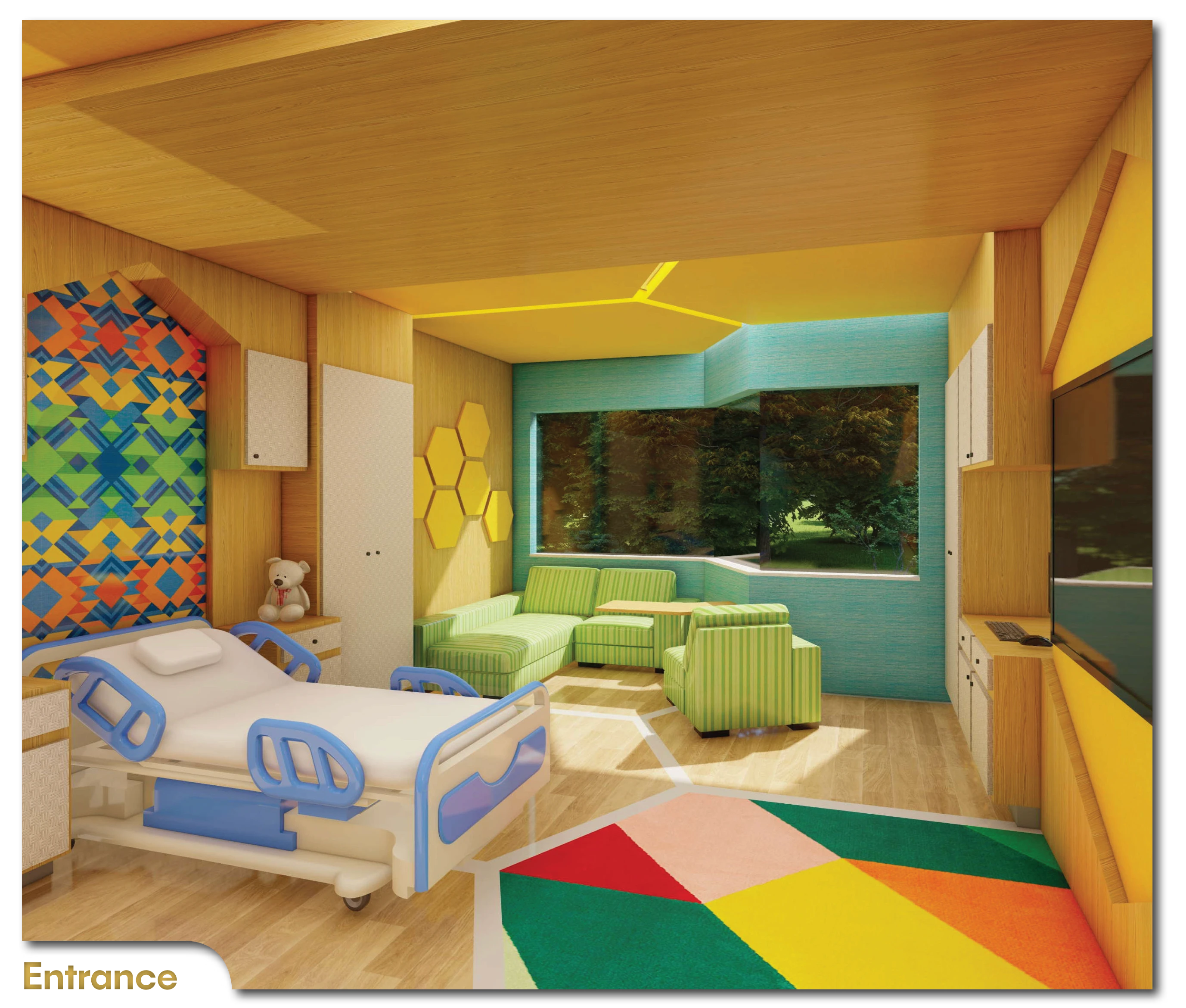
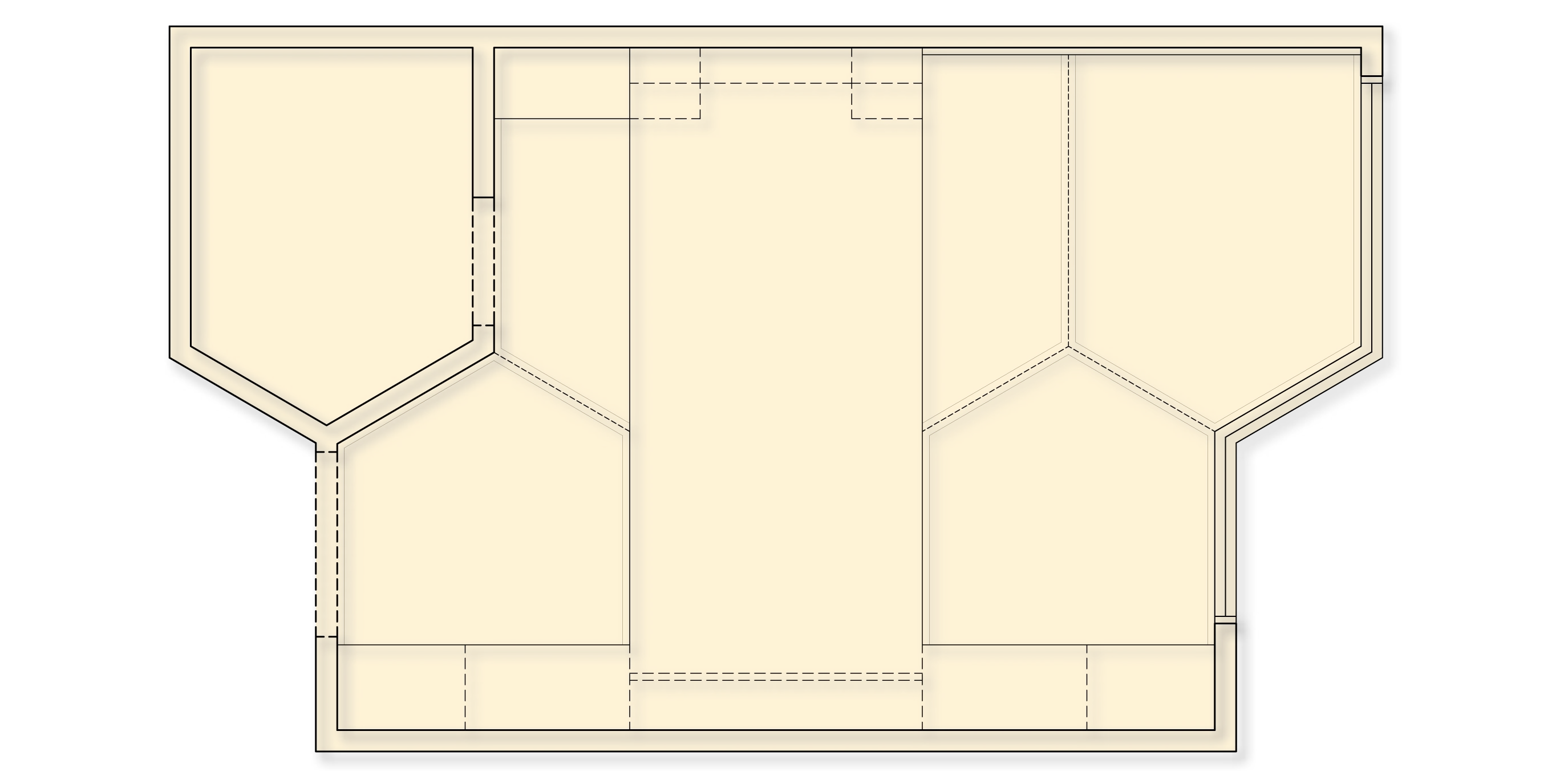
The floor plan is based on a pattern of seven interlocking pentagons, mimicking the hexagonal structure of a honeycomb. Additionally, each shape creates an invisible outline that divides the room into three distinct areas for the doctors, patient, and guests. The design is fully ADA accessible, featuring grab bars, proper wheelchair turning radii, and expandable doors to accommodate patient beds. This room would be one of many in the hospital, and when the rooms are arranged side by side with flipped floor plans, they will even form a cohesive hexagonal shape from the outside too.

color psychology.
Furnishing hospital rooms with bright, playful colors not only helps make the environment feel less intimidating for children, but also promotes faster healing by creating a safe and welcoming atmosphere. Colors like orange, associated with success and bravery; yellow, linked to creativity and happiness; green, symbolizing healing and freshness; and blue, representing trust and peace, all contribute to a positive and nurturing space for young patients.